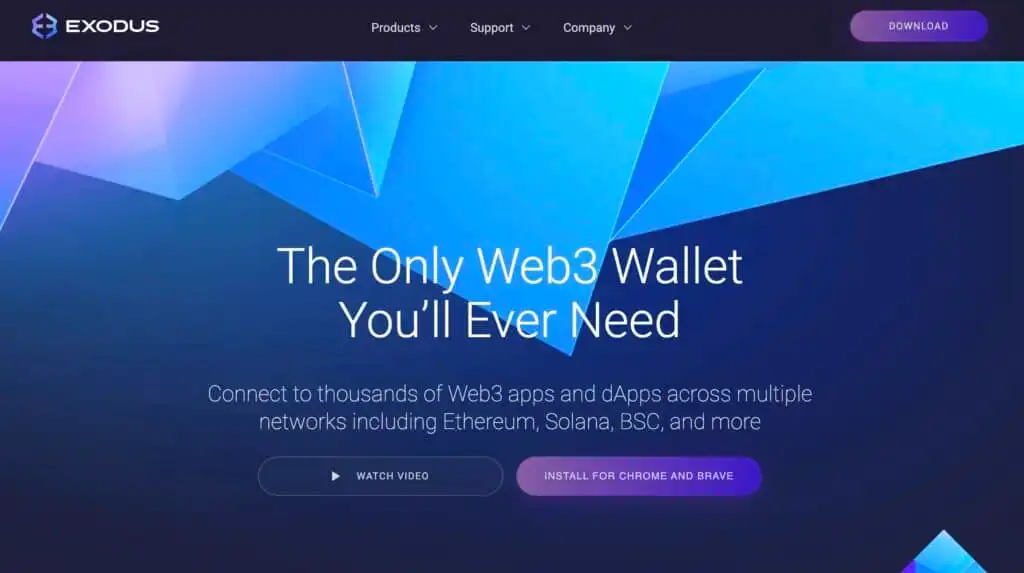
Exodus Web3 Wallet: A Modern Gateway to Decentralized Finance
In the rapidly evolving landscape of decentralized finance and digital ownership, the Exodus Web3 Wallet emerges as a refined, user‑centric portal into the world of blockchain ecosystems. Unlike custodial services that hold your assets on your behalf, Exodus embraces the core ethos of Web3 by offering a self‑custodial wallet where the user retains full authority over private keys and recovery phrases. This paradigm ensures true financial sovereignty and aligns with the foundational principles of decentralization that define blockchain technologies.
Seamless Multi‑Chain and Asset Management
At its core, Exodus Web3 Wallet is designed to support a myriad of blockchain networks and tokens, enabling users to manage diverse portfolios from a unified interface. Whether you hold Bitcoin, Ethereum, Solana, or various ERC‑20 and SPL tokens, Exodus enables cross‑chain interactions without the friction that typically accompanies managing assets across disparate platforms. This multi‑chain capability empowers users to explore DeFi protocols, engage with NFTs, and interact with decentralized applications (dApps) — all within the same wallet environment.
The wallet’s portfolio dashboard is both intuitive and comprehensive, providing real‑time analytics, historical performance overviews, and simplified navigation for asset monitoring. Such clarity transforms complex blockchain data into digestible insights, suitable for both newcomers and seasoned traders.
Integrated Web3 Connectivity and dApp Interactivity
A defining strength of Exodus Web3 Wallet is its native Web3 connectivity. Through built‑in support for decentralized applications, users can seamlessly interact with DeFi platforms, NFT marketplaces, blockchain games, and DAO governance interfaces without relinquishing control of their keys. This level of integration reduces reliance on intermediary services and preserves the self‑custodial security model while unlocking the full potential of decentralized ecosystems.
Whether minting NFTs, providing liquidity, or staking tokens for passive income, the wallet’s Web3 interface facilitates these actions with transparent permission requests and secure transaction signing.
Security Architecture and User Control
Security underpinning the Exodus Web3 Wallet is both robust and pragmatic. All private keys are encrypted locally on the user’s device and are never transmitted to external servers. This on‑device key storage, coupled with password protection and optional biometric access on mobile devices, mitigates common custodial risks while ensuring that users remain fully in control of their assets.
Additionally, Exodus integrates with hardware wallets such as Trezor and Ledger, offering an extra layer of cryptographic security for users holding significant assets. Although no wallet can eliminate all risks (e.g., phishing attacks or compromised devices), this hybrid model of usability and security makes Exodus a compelling choice for diverse users.
Conclusion: Bridging Usability and Decentralization
The Exodus Web3 Wallet stands as a sophisticated bridge between traditional crypto management and the next generation of decentralized finance. Its elegant design, multi‑chain support, integrated dApp interactivity, and resilient self‑custody framework represent a thoughtful balance of accessibility and power. Whether you are exploring NFTs, engaging with DeFi protocols, or simply seeking a secure, modern wallet interface, Exodus offers a comprehensive and forward‑looking solution to navigate the complex terrain of Web3.